All about Lion’s Mane

Lion’s Mane mushrooms are treasured wellness ingredient from ancient folklore to the latest in chemical research. But are the mushrooms helpful for your  well-being? We’ll examine ten  benefits backed by the latest research.

Lion’s mane stands out as one of the most nutritious mushrooms. In fact, it even stands out in all the natural world because of its ability to biosynthesize around 70 different secondary metabolites! That’s an incredible number of healthy compounds, and many of them unique to the species.

Lion’s mane mushroom has been the subject of study by scientists trying to understand the true benefits behind this folk medicine staple. Humans used the mushroom for centuries with reported benefits in many areas of well-being. Recent studies uncovered the amazing bioactive compounds found in lion’s mane.
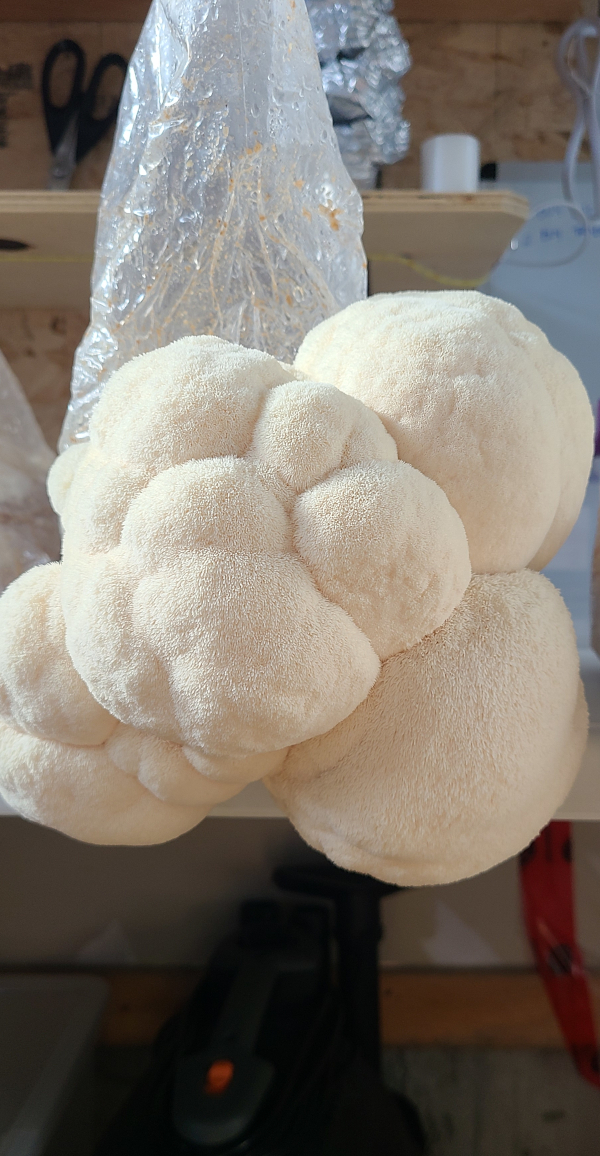
Lion’s Mane

Hericerins  are a new class of aromatic compound found in lions mane mushroom. Aromatic compounds are unique in nature because they often have higher levels of chemical stability.

Lion’s Mane may help modulate the immune system by increasing the activity of immune cells like macrophages. This means it could support your body’s natural ability to defend itself against pathogens, especially helpful during colder months or times of stress.

What Is Lion’s Mane Good For?
While Lion’s Mane mushrooms have a long history of use in traditional Chinese and Japanese practices, it’s only in recent years that researchers have begun to explore their properties more deeply. Some early studies suggest that compounds found in Lion’s Mane may interact with the nervous system and support cognitive and gut-related functions, but these effects are still being studied and are not yet recognized under Canada’s health claims regulations.

What we do know for certain is that fresh Lion’s Mane is a delicious and versatile gourmet mushroom that’s high in protein, low in fat, and easy to incorporate into a balanced, whole-food diet.

Fresh Lion’s Mane mushrooms offer a broad, whole-food experience. They can be sautéed, grilled, or shredded and added to pasta, risottos, or stir fries, making them an easy and delicious addition to your meals.

Are There Any Side Effects?
Lion’s Mane is generally considered safe to eat and well-tolerated. However, as with any new food, we recommend starting with a small amount if you’ve never tried it before.

If you have mushroom allergies, immune-related conditions, or take specific medications, speak to a health professional before consuming Lion’s Mane regularly.

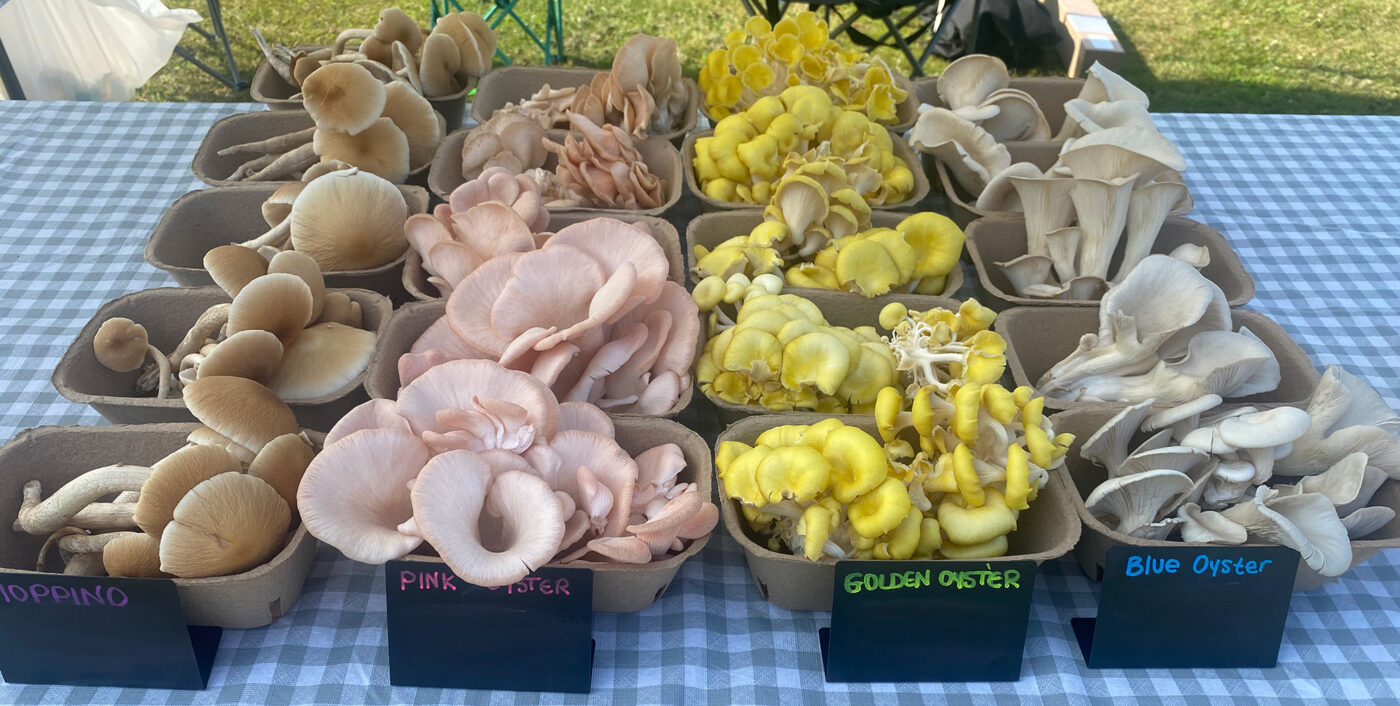
Pink Oyster Mushrooms

Pink oyster mushrooms, with their stunning ruffles and beautiful pink blush, are perhaps one of the most photographed mushrooms on Instagram.


Nutrition Benefits

Pink oyster mushrooms share a similar nutrient profile as oyster mushrooms. They have a high protein and fiber content. They also are a rich source of B vitamins, potassium, copper, selenium, and folate. According to research, oyster mushrooms contain an antioxidant called ergothioneine, which may reduce plaque build-up in arteries and improve heart health. Studies show that these mushrooms have potent antinociceptive, antitumor, antioxidant, and immunological activities.

How To Use Pink Oyster Mushrooms?

These blush-colored beauties are stunning to look at but unfortunately, they do not retain their beautiful color when cooked. They have a distinctive meaty taste, reminiscent of bacon or ham. This is one of the reasons you can use pink oyster mushrooms as a meat substitute in vegetarian dishes.

While oyster mushrooms are mostly used in Asian dishes, you can use them in pasta, soups, and as a pizza topping. They are perfect for roasting and sautéeing as these cooking methods allow the oyster mushroom’s complex flavors to develop fully.

The best way to cook the mushrooms is to coat them with olive oil or sesame oil and your favorite spices or herbs. Add them to a hot pan and stir-fry. Make sure that you cook them till all the liquid evaporates and the mushrooms become smaller in size because otherwise, they may have a bitter flavor. They take about 15-20 minutes to be cooked well. You can also quickly tear the bigger mushroom up or cut them roughly for rustic dishes. Here are some ways you can use pink oyster mushrooms.

  • Roast them till brown and chop into tiny pieces. These can serve as bacon bits to be sprinkled over Sautéed Green Beans with Garlic or any of your favorite side dishes.
  • You can also use it in pilafs, couscous, and salads

Reishi mushroom or Ganoderma lucidum

Short History

The reishi mushroom or Ganoderma lucidum has been used in oriental medicine for thousands of years. It is mentioned in the oldest Chinese pharmacopoeia. In ancient times, it was believed that this mushroom has extraordinary power! In Chinese legends, he was even credited with the ability to make a person immortal. In China, Ganoderma lucidum is called “lingzhi”, which means “mushroom of immortality”, and in Japan it is called “reishi”, which means “mushroom of spiritual power”. .

Ganoderma lucidum is rare in the wild, mainly in the southern and southeastern regions of Asia in dense mountain forests, on weakened and dying hardwood trees. It is believed that in ancient times, the “magical” power of reishi was attributed precisely because it was difficult to get. Only rich, privileged members of society could afford to treat them.

Description

Reishi develops a tough, woody fruiting body. The cap surface appears lacquered and ranges from deep red to orange and brown, often with a pale growing edge. Because it is dense and fibrous, Reishi is not eaten like a standard culinary mushroom. Instead, it is usually prepared as a long-simmered tea, used after extraction or even for decorative purposes.


What’s in the composition

The fruit body, spores, and mycelium of reishi contain about 400 biologically active compounds with immunomodulatory, antitumor, antioxidant, anti-inflammatory, and regenerating properties. Many of them are specific to this type of fungus. The composition contains proteins, fats, carbohydrates, fiber, vitamins, macro-, microelements. Protein includes all the essential and non-essential amino acids, but is especially rich in lysine and leucine. The main groups of substances responsible for the biological activity of reishi include: triterpenes, mainly ganoderic and lucidenic acids; peptidoglycans (polysaccharide-peptide complexes); polysaccharides. In addition, beta-glucans, lectins, phenols, steroids, alkaloids, essential oils, phytoncides, enzymes, coumarins, polyunsaturated fatty acids, nucleosides (adenosine, guanosine) were found in reishi. The vitamin and mineral composition includes vitamins C, D, E, group B, carotene, potassium, calcium, phosphorus, magnesium, selenium, iron, zinc, copper, manganese. Varnished tinder is especially appreciated for its high content of the rare trace element germanium, which has interferogenic properties and helps to saturate tissues with oxygen. There is 10 times more of it in this mushroom than in ginseng!

Reishi is not just a mushroom, but a mini—factory for the synthesis of bioactive components.

The microelements, polysaccharides, peptides, and essential oils found in Reishi activate plastic processes, thereby improving the condition of the skin, nails, and hair.

Antioxidant effect

Ganoderma lucidum polysaccharides and triterpenoids exhibit pronounced antioxidant activity. They are effective in combating oxidative stress and its consequences.,

What The Research Is Exploring

Reviews and small trials have examined areas such as general immune modulation, antioxidant capacity, and quality of life measures, often using standardized extracts. Results vary by preparation and study design. Where benefits are reported, authors usually recommend larger, well-controlled human studies before strong conclusions are drawn. This is a developing field. Good practice is to keep expectations sensible, prioritise whole foods, and seek personalised advice from a health professional if you have specific questions.

Reishi occupies a distinct niche. It is not a frying pan mushroom, yet it remains a respected traditional ingredient with a striking appearance and a characteristic flavour. Modern research is developing and often uses concentrated extracts, which means cautious interpretation is wise. By understanding what Reishi is and is not, you can decide how it fits into your life.


1. Xu, X., et al. (2024). “Distributions of Lanostene-Derived Triterpenoids and Glucan in Different Parts and Developmental Stages of Ganoderma lucidum Fruiting Bodies.” Journal of Fungi, 2024. PMID: 39701732.

2. Cichewicz, R.H., & Thorpe, P.A. (2014). “The antimycobacterial properties of polysaccharides from higher basidiomycetes mushrooms: structure-function relationships.” Current Medicinal Chemistry, 21(14), 1640-1660.

3. Zhang, J., et al. (2023). “Changes of Active Substances in Ganoderma lucidum during Different Growth Periods and Analysis of Their Molecular Mechanism.” International Journal of Molecular Sciences, 24(5). PMID: 11173900.

4. Zhong, Z., et al. (2018). “Comprehensive comparison of polysaccharides from Ganoderma lucidum and G. sinense: chemical, antitumor, immunomodulating and gut-microbiota modulatory properties.” Scientific Reports, 8, 9217.